


Sciatic Nerve Pain in Bed: Why It Flares After Midnight
We’ve all been there: you finally settle in for a restful night, only to be jolted awake at 2:00 AM by a searing, radiating pain travelling from your lower back down your leg. If you feel like your sciatica has a personal grudge against your sleep schedule, you aren’t alone.
Research indicates that approximately 40% of people will experience sciatica during their lifetime, and for a significant number, symptoms peak during the night. At Putnams, we believe you shouldn’t have to "just live with it." Understanding why your nerve flares up is the first step toward reclaiming your sleep.
So, if you find yourself pacing the floor at 2:00 AM, you’re not imagining it, there are physiological reasons why your nerves "wake up" just as you’re trying to shut down.
What Happens to the Sciatic Nerve Overnight?
The sciatic nerve is the longest and thickest nerve in your body.
When you sleep, your body undergoes subtle shifts that can turn a minor pinch into a major flare.
1. Disc Rehydration and "Nightly Height"
During the day, gravity compresses your spinal discs, squeezing out fluid. At night, when you lie flat, these discs undergo hydrostatic rehydration, absorbing fluid to recover. While this is healthy, it causes the discs to swell slightly. If you have a herniated or bulging disc, this increased volume can put more pressure on the exiting nerve roots.
2. The Inflammation Peak
Our bodies follow a circadian rhythm that dictates inflammatory responses. Studies show that levels of the anti-inflammatory hormone cortisol are at their lowest around midnight. This dip allows inflammatory chemicals to pool around the nerve, intensifying the "burning" sensation. According to The Lancet, even minor inflammation in the confined space of the spine can lead to significant radiating pain.
See also - Essential Tips for Sleeping Better with Sciatica
Why Static Positions Trigger Pain
Unlike muscles, which often enjoy being still, nerves require blood flow and movement to stay "happy."
-
Static Loading: When you stay in one position for hours, you apply constant pressure to specific points along the nerve. This is known as static loading.
-
The Piriformis Factor: If you sleep on your side without proper support, your top leg can slide forward, rotating the hip. This stretches the piriformis muscle, which sits directly over the sciatic nerve. If that muscle tenses or spasms, it acts like a "clamp" on the nerve.
-
Blood Flow Decrease: Inactivity can lead to a slight decrease in local blood circulation. According to the Cleveland Clinic, nerves are highly sensitive to oxygen levels; reduced flow can lead to the tingling and numbness associated with a flare.
The Best Sleep Positions for Sciatica Relief
To silence the midnight flare, the goal is spinal neutrality, ensuring the natural curves of your back are supported so the nerve has maximum "breathing room." So what is the best sciatica sleep position?
For Back Sleepers: The Leg Elevation Method
Sleeping with sciatica can mean there are no truly 'favourite' sleep positions. Sleeping flat can cause your lower back to arch, pinching the nerve.
-
-
The Benefit: Elevating your knees tilts your pelvis and opens up the gaps in your spine where the nerves exit. Leg elevation sciatica therapy is not for everyone, but when it works, it can be the ticket to a restful night's sleep.
-
The Solution: Using a Bed Wedge under your knees provides consistent, comfortable elevation that stays in place, unlike loose pillows that shift while you dream.
-
For Side Sleepers: The Hip Neutraliser
Side sleeping is great for breathing, but tough on the hips if you aren't supported.
-
-
The Benefit: Keeping your knees and ankles separated maintains a neutral pelvic tilt.
-
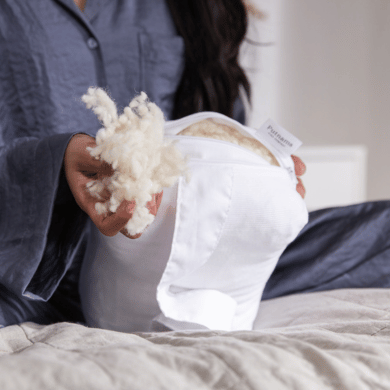
The Solution: Our Memory Foam Knee Pillow is contoured to fit your legs perfectly, ensuring you stay aligned without even thinking about it.
-
For Stomach Sleepers: The Red Flag
Generally, stomach sleeping is discouraged for sciatica as it forces the neck to turn and the lower back to arch excessively. Although this is not considered to be the best sleep position for sciatica nerve pain, if you must sleep this way, place a flat pillow under your pelvis to take the pressure off the lumbar discs.
See also - Living with Sciatica: Strategies for Dealing with Chronic Pain
Quick Comparison: Sleep Support Pillows
| Pillow | Benefit | Best For |
| Knee Pillow | Maintains hip alignment | Side Sleepers |
| Lumbar Roll Pillow | Supports the natural curve | Back Sleepers |
| Bed Back Support Pillow | Prevents "sinking" into painful curves | Everyone |
| Butterfly Pillow | May reduce sensory "noise" from nerves | Restless Sleepers |
Beyond the Pillow: Nighttime Nerve Care
If positioning isn't enough, consider these "nerve hygiene" tips before bed:
-
Nerve Flossing: Gentle exercises that glide the nerve through the tissue canal can reduce adhesions.
-
Heat Therapy: A 15-minute heating pad session on the lower back before bed can relax tight muscles and increase blood flow.
-
Check Your Foundation: A mattress that is too soft allows the pelvis to sink, creating a "hammock" effect that is disastrous for the sciatic nerve. The Harvard Health Publishing suggests a medium-firm mattress is usually optimal for back health.
It’s a great idea to have a specific routine ready for that "pre-sleep" window to avoid the inevitable sciatica flare at night.
These movements are designed to "glide" the nerve through its pathway, preventing it from getting "stuck" or compressed when you finally lie down.
Your Sciatica Sleep Checklist
We know how exhausting chronic pain can be.
To help you get back to those deep, restorative ZZZs, try this simple nightly routine:
-
Decompress: Spend 5 minutes doing gentle pelvic tilts before getting into bed.
-
Support: Choose a pillow that matches your sleep position (Knee pillow for side, Wedge for back).
-
Temperature: A warm bath or a Heat Pack on your lower back can relax the muscles surrounding the nerve before you tuck in.
Studies show that improving sleep quality can actually lower your sensitivity to pain, creating a positive cycle of healing. You deserve to wake up feeling refreshed, not restricted.

The 5-Minute "Nightly Glide" Routine
Perform these movements slowly. The goal is gentle tension, never sharp pain. If you feel a "zing," back off the range of motion.
1. Seated Nerve Glides (2 Minutes)
-
The Move: Sit on the edge of your bed with your legs hanging off. Slump your mid-back slightly and look down at your chest.
-
The Action: Slowly straighten your "painful" leg while simultaneously looking up at the ceiling. Then, bend your knee and tuck your chin back to your chest.
-
Why it works: This creates a "pulley" effect, pulling the nerve toward the head and then toward the feet, breaking up minor adhesions.
-
Repetitions: 10–15 glides.
2. The "Modified" Figure-Four (90 Seconds)
-
The Move: Lie on your back. Cross the ankle of your painful leg over the opposite knee.
-
The Action: Gently push the crossed knee away from your body with your hand. For a deeper stretch, pull the non-painful thigh toward your chest.
-
Why it works: This targets the piriformis muscle, which is the primary "gatekeeper" that compresses the nerve in the hip.
-
Duration: Hold for 30 seconds; repeat 3 times.
3. Pelvic Tilts (90 Seconds)
-
The Move: Lie on your back with knees bent and feet flat on the mattress.
-
The Action: Flatten your lower back against the bed by tilting your pelvis upward, then arch your back slightly to create a small gap.
-
Why it works: This "pumps" the lumbar discs, encouraging the fluid exchange (rehydration) mentioned earlier to happen more evenly.
-
Repetitions: 20 slow tilts.
Important Safety Note
If your sciatica is accompanied by sudden weakness in the leg, "foot drop" (inability to lift the front of your foot), or any loss of bladder/bowel control, skip the stretches and consult a doctor immediately. These can be signs of Cauda Equina Syndrome, which requires urgent medical attention.
At Putnams, we believe that a flare-up after midnight shouldn't be your "normal."
You deserve to wake up feeling refreshed and ready to take on the day, rather than fighting through the fog of a restless night. By making these small adjustments to your sleep posture and leaning on the British-made support of a Putnams Knee Pillow or Bed Wedge, you’re giving your sciatic nerve the space it needs to settle down.
We’ve spent over 40 years perfecting the art of comfort because we know that when you’re supported, you heal better, feel better, and live better.
Here’s to saying goodbye to the midnight toss-and-turn and finally waking up to the pain-free, restorative sleep you’ve been dreaming of!


From the blog
View all




Leave a comment