


Knee Pain at Night: Why Sleep Position Strains the Joint
Quick answer: Knee pain at night often worsens because lying still slows synovial fluid circulation, inflammation pools around the joint, and evening cortisol dips remove the body's natural anti-inflammatory buffer. Side sleeping adds direct joint compression. A supportive knee pillow between the legs eases pressure and can restore restful sleep.
You collapse into bed after a long, tiring day, and just as you settle, your knees begin to throb. You shift, you turn, you try every angle, but the dull ache refuses to fade.
If this sounds familiar, you are far from alone.
Knee pain at night is one of the most disruptive and underreported symptoms of joint problems. It particularly affects adults aged 40 to 75 who are managing osteoarthritis, recovering from ligament injuries, or living with lingering post-surgical sensitivity.
Research highlighted by Haleon Health Partner suggests that up to 75% of people with severe osteoarthritis experience nocturnal knee pain. According to NICE, an estimated 10 million people in the UK live with osteoarthritis, with around 5.4 million affected by knee osteoarthritis alone.
This guide explains why lying down triggers such intense joint distress, how your side-sleeping posture loads the joint, and, most importantly, how the right positioning and knee pillow support can help you reclaim your nights.
Why Does Knee Pain Get Worse at Night?
The shift from standing to lying down sets off several biological and mechanical changes that can turn a mild daytime ache into knee pain worse at night. It isn't in your head, there are real structural and chemical reasons your joints rebel at bedtime.
Reduced Synovial Fluid Movement
During the day, your joints are constantly moving. This motion acts like a biological pump, circulating synovial fluid, the thick, gel-like liquid that lubricates the knee and nourishes the cartilage. When you lie down for hours, that pumping action stops.
As orthopaedic surgeon Dr Kim Stearns of Cleveland Clinic explains, "When you're moving your joints, they're also staying lubricated. When you're not moving, they don't lubricate as much. The lack of movement, the lack of lubrication, it all catches up with you." The fluid thickens, the cartilage is left less cushioned, and the joint feels stiff and tender.
Inflammation Build-Up and Hormonal Shifts
Throughout a busy day, tiny stresses accumulate in an arthritic or injured knee.
While you're active, movement and blood flow keep the swelling dispersed. Once you stop moving, that inflammatory fluid pools around the joint capsule, raising pressure inside the knee.
Your circadian rhythm makes this worse.
The body's natural anti-inflammatory cortisol levels dip in the evening, which lets pain signals come through more strongly. Inflammatory proteins called cytokines also tend to rise overnight, peaking in the early hours, which is why so many people wake between 2am and 5am with a knee that feels heavier and hotter than it did all day.
Fewer Distractions, More Awareness
During daylight hours, work, conversation and the everyday hubbub pull your attention away from minor aches. At night, the room falls quiet, and your brain has nothing competing for its focus.
The pain hasn't actually increased; your perception of it has.

How Side-Sleeping Position Loads the Joint
If you're among the many adults who sleep on their side, your favourite position may be the very thing troubling your knees. Side sleeping knee pain is a direct result of the compressive forces applied to the joint when your body rests laterally.
When you lie on your side, gravity pulls your top leg down onto the mattress or directly onto your bottom leg. This creates a cascade of problems:
- Direct joint compression: When your knees rest on top of one another, the inner bones of the knees grind together. For anyone with osteoarthritis, where the protective cartilage is already worn thin, this bone-on-bone contact causes intense, throbbing discomfort.
- Valgus stress and ligament strain: As the top leg drops, the knee collapses inward into an unnatural angle. This pulls on the outer structures, including the iliotibial (IT) band, while compressing the inner side of the joint. Over six to eight hours, this knee joint pressure stretches ligaments beyond their comfort zone.
- Pelvic misalignment: Side sleeping without leg support pulls the whole pelvis out of neutral alignment, sending a rotational force down through the hip and femur into the knee. For anyone with a previous meniscus tear or knee surgery, this subtle torque is enough to trigger an inflammatory flare overnight.
See also - Sleep and Joint Health: Why Stiffness Starts at Night
Supportive Positioning for Pain-Free Nights
Understanding the biomechanics behind your pain means you can actively combat it.
A few adjustments to your sleep posture, combined with the right supportive cushions, can profoundly reduce joint load and help you sleep through the night.
The Power of Knee Pillows and Leg-Spacing Cushions
For side sleepers, keeping the hips, thighs and knees parallel is the ultimate goal. The simplest way to achieve this is with a dedicated leg-spacing cushion.
Placing a firm knee pillow between your legs immediately relieves the bone-on-bone compression on the inner knee, neutralises the valgus stress on your ligaments, and stops the IT band from stretching taut across the joint. Skip soft feather pillows, which flatten under the weight of your leg.
A contoured memory foam design holds its shape all night.
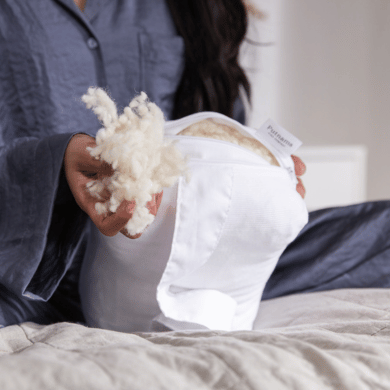
Our handmade Knee Pillow Side Sleeper Adjustable Strap is designed for exactly this. Its adjustable strap keeps the cushion in place so it doesn't slip away as you shift, keeping your hips stacked and your spine neutral. For those who prefer natural materials, the Natural British Wool Knee Pillow and the vegan, biodegradable Organic Buckwheat Hulls Knee Pillow offer breathable, eco-conscious alternatives, all handmade in Devon.
Bolstering the Back-Sleeping Position
If you sleep on your back, your knees aren't entirely safe from strain. Lying flat forces the knees into full extension, which increases pressure on the kneecap and strains the back of the joint, especially if your hamstrings and calves are tight.
The fix is simple.
As Dr Jeffrey Burns of Hartford HealthCare advises, "If you prefer to sleep on your back, try sliding a small pillow or rolled towel under the knees for support. A medium-firm mattress is usually best because it supports the body's natural curves." A gentle bend under the knees brings the joint to its natural resting position, where internal pressure is at its lowest.
Elevating a Swollen or Recovering Knee
If your knee is swollen, recently injured, or recovering from surgery, elevation before bed can make a noticeable difference. Raising the lower leg helps fluid drain away from the joint, reducing swelling and pressure.
A supportive Leg Rest – Leg Raiser keeps the whole lower leg supported at the right angle, rather than propping the knee alone, which can increase stiffness.
Optimise Your Pre-Sleep Routine
A few simple habits round out your night-time strategy:
- Temperature therapy: For a hot, swollen knee, apply an ice pack for 15 minutes before bed. For a chronically stiff, achy knee, a warm compress or bath helps thin that thickened synovial fluid.
- Gentle movement before bed: Two to three minutes of unweighted heel slides or ankle pumps while lying in bed helps lubricate the joint right before you fall asleep.
- Strengthen during the day: Low-impact activities like swimming or cycling keep the quadriceps and hamstrings strong, so they can support the joint at night.
Here's a quick reference for supportive positions:
|
Sleep Position |
Recommended Support |
Why It Helps |
|---|---|---|
|
Side sleeping |
Knee pillow between the knees |
Prevents joint compression, keeps hips stacked |
|
Back sleeping |
Small pillow or bolster under the knees |
Introduces a gentle bend, lowers joint pressure |
|
Swelling or post-surgery |
Leg raiser under the lower leg |
Drains fluid, reduces overnight swelling |
|
Stomach sleeping |
Avoid where possible |
Twists knees and hips, worsening strain |
When to Speak to a Professional
Most night-time knee pain, while exhausting, isn't a medical emergency.
But some symptoms deserve prompt attention. Book an assessment if your knee pain regularly wakes you, has lasted more than two to three weeks, comes with swelling, warmth or redness, or no longer responds to over-the-counter relief. Persistent pain that steals your sleep is a signal that something in the joint needs proper evaluation.
Reclaim Your Rest Tonight
Night-time knee discomfort is a complex mix of anatomy, gravity and physiology, from stagnant synovial fluid to the mechanical strain of an unsupported side-sleeping posture.
The good news is that treating the root cause of the strain is often straightforward.
By keeping your joints aligned with ergonomic support, you can break the frustrating cycle of broken sleep and morning stiffness. Explore our handmade range of knee pillows and leg supports designed in Devon, trusted by customers across the UK, and made to help you find comfort night after night.
See also - Mastering the Art of a Restful Night's Sleep: How to Sleep Better in 8 Easy Steps
Frequently Asked Questions
Why does my knee hurt more at night than during the day?
At night, reduced movement slows the circulation of synovial fluid that lubricates the joint, inflammation pools around the knee, and your natural anti-inflammatory cortisol levels drop. With fewer distractions, your brain also focuses more on the pain, so it feels sharper even when the underlying problem is unchanged.
What is the best pillow for knee pain for side sleepers?
A firm, contoured knee pillow placed between the knees works best for side sleepers. It keeps the hips, knees and spine aligned, and prevents the knees from grinding together. A design with an adjustable strap, such as our Putnams Knee Pillow, stays in place through the night rather than slipping away as you move.
How can I relieve knee pain while sleeping?
Sleep on your side with a knee pillow between your legs, or on your back with a small pillow under your knees. Apply ice to a swollen knee before bed, use gentle heel slides to lubricate the joint, and elevate the leg if there is swelling.
A medium-firm mattress also helps keep your joints in neutral alignment.
Should I use ice or heat for knee pain at night?
Ice works best for a swollen, warm or recently injured knee, as it reduces inflammation. Heat suits chronic aching and stiffness, helping to relax the surrounding muscles and thin thickened joint fluid.
Try both and see which brings you more relief; there is no single right answer.
When should I see a doctor about night-time knee pain?
Seek advice if the pain regularly wakes you, has lasted more than two to three weeks, is accompanied by swelling, redness or warmth, or no longer eases with over-the-counter painkillers. Sudden severe pain, an inability to bear weight, or a visibly deformed knee warrants urgent attention.
See also - Your Guide to Healthy Sleep Habits and Finding Your Ideal Sleep Position


From the blog
View all




Leave a comment