


What Is The Best Pillow For Neck Pain?
You go to bed exhausted after a long, stressful day at the office, hoping for a restorative eight hours of sleep. Instead, you wake up feeling stiff, your head aches, and turning your neck sends a sharp jolt down your shoulder. If your high-stress job is already keeping you awake, waking up in physical pain only adds to the anxiety.
You are certainly not alone in this struggle. According to the Global Burden of Disease Study, neck pain affects approximately 203 million people globally.
Closer to home, the NICE notes that up to 70% of adults in the UK experience neck pain at some point in their lives. Often, the silent culprit behind this morning discomfort is poor spinal alignment caused by your bedding.
Finding the best pillow for neck pain is a simple but highly effective way to transform your sleep. This guide explains exactly why you are waking up sore, how different sleeping positions impact your spine, and what pillow is best for neck pain, so you can finally get the restful night you deserve.
What Causes Neck Pain While Sleeping?
Many desk-based professionals spend hours looking down at screens, developing what experts call "tech neck". When you finally lie down, your cervical spine needs to recover. If your neck pain pillow fails to support the natural C-shaped curve of your neck, your body enters a state of "muscle guarding".
Even while you sleep, your muscles remain tense to protect your unstable spine.
This constant contraction prevents deep tissue repair. Researchers have found that sleeping positions and poor support are responsible for about 5% of chronic neck pain cases.
Here is a quick breakdown of how poor pillow support affects your body:
|
Pillow Issue |
Physical Effect |
Resulting Symptoms |
|---|---|---|
|
Pillow too high |
Hyper-flexion (chin pushed to chest) |
Stretched back muscles, compressed discs, headaches |
|
Pillow too low |
Hyper-extension (head drops backward) |
Compressed facet joints, pinched nerves |
|
Wrong shape |
Lack of cervical support |
Muscle guarding, stiffness, tingling in arms |
What To Look For In The Best Pillow For Neck Pain
If you are looking for pillows for neck issues, you need to focus on biomechanics rather than just softness. Comfort is subjective, but proper alignment is an exact science.
When evaluating a pillow for neck pain, look for these essential features:
- Proper Loft (Height): Your pillow must fill the gap between your head and the mattress. A study published in the Journal of Manipulative and Physiological Therapeutics found that for side sleepers, a pillow height of roughly 10cm resulted in the least amount of muscle tension.
- Responsive Materials: Memory foam and graphite latex are excellent choices. They conform to the weight of your head, distributing pressure evenly.
- Adjustability: Because everyone has different shoulder widths and mattress firmness levels, an adjustable design allows you to add or remove height.
Putnam Pillow - This pillow is V supportive for my neck. It's much better than the memory foam one which I had before. That was too hard and hurt my ears when side sleeping. - Patricia V
Best Types Of Pillows For Neck Pain Relief
Finding the right shape and material makes a massive difference in reducing sleep anxiety and physical discomfort. Here are some of the top expert pillow recommendations for neck pain.
Contoured Memory Foam Pillows
A contour pillow features a dip in the middle for your head and a raised edge to support your cervical spine. The Putnam Pillow is a best-selling ergonomic option designed specifically to maintain spinal alignment. Recommended by chiropractors, these neck pillows help reduce tension headaches, sore ears, and stiff necks.
Cervical Roll Pillows
People recovering from injuries or dealing with specific spinal conditions often ask, "What is the best pillow for cervical neck pain?" A Cervical Roll Pillow provides targeted support. You can place it inside your normal pillowcase to keep your vertebrae naturally aligned, taking the pressure off sore spots.
Adjustable Pillows
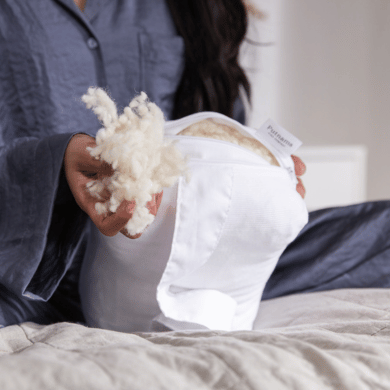
If you change positions frequently, your height requirements will change throughout the night. Our Height Adjustable Pillow features removable woollen layers. This flexibility ensures you always have the exact height required to keep your spine neutral.
See also - Neck Stiffness in the Morning: How Sleep Posture Causes Overnight Pain
How To Choose The Right Pillow For Your Sleeping Position
Your ideal pillow for neck pain depends entirely on how you sleep.
- Side Sleepers: You need a higher loft to fill the significant gap between your ear and the edge of your shoulder. A firm, supportive option like our Memory Foam Pillow prevents your head from tilting downward.
- Back Sleepers: You require a medium-loft pillow. If the pillow is too thick, it pushes your head forward and restricts your airway. A contoured design cradles the skull while supporting the neck arch.
- Front Sleepers: Sleeping on your stomach forces your neck to twist, causing severe strain. If you must sleep this way, use a very low-profile option like the Butterfly (Japanese Style) Pillow to minimise the unnatural angle.
See also - Neck Pain From Pillow Height: When ‘One Size Fits All’ Fails

Best Pillow For Neck Pain FAQs
1. How do I know if my pillows are ok for neck pain?
Clinical research suggests that a "good" pillow is one that maintains your neutral spinal alignment and minimises muscle activity (EMG). You can self-test your pillow using these three indicators:
-
The "Alignment Line": When lying in your preferred position, have someone check if your nose is in a straight line with your sternum.
-
Pillow Too High: Your chin is tucked toward your chest (Flexion). This overstretches back neck muscles and compresses spinal discs.
-
Pillow Too Low: Your chin pokes toward the ceiling (Extension). This "jams" the facet joints and strains the front of the neck.
-
-
The "Morning Stiffness" Test: If your pain is significantly worse upon waking than it was when you went to bed, the pillow is likely failing to support your cervical curve throughout the night.
-
The "Punch" Habit: If you find yourself constantly folding, fluffing, or "punching" your pillow into a specific shape during the night, it lacks the structural integrity (loft) to support your head's weight.
2. What are the 5 D's for neck pain?
The "5 D's" are a set of red flag symptoms used by clinicians to identify serious neurological or vascular issues (like cervical arterial dysfunction) that require immediate medical attention. They are often accompanied by the "3 N's" (Nausea, Numbness, Nystagmus).
-
Dizziness: Specifically, vertigo or a feeling that the room is spinning when moving the neck.
-
Diplopia: Double vision or other sudden visual disturbances.
-
Dysarthria: Sudden difficulty speaking or slurred speech.
-
Dysphagia: Sudden difficulty swallowing.
-
Drop Attacks: Sudden, spontaneous falls without loss of consciousness.
Source: Journal of Manual & Manipulative Therapy / PMC NIH.
3. What to look for in a pillow for neck pain?
According to orthopaedic research, the following features are most effective for pain relief:
-
Contoured Design: Research shows that pillows with a "cervical roll" or a lower centre for the head and a higher edge for the neck help maintain the natural curve of the spine better than traditional flat pillows.
-
Loft (Height) by Position: Side Sleepers: Typically need a loft of 10cm to 14cm to fill the gap between the ear and the mattress. Back Sleepers: Require a medium-thin loft to avoid craning the head forward.
Material Density: Memory foam and graphite latex are preferred over feather or down because they provide consistent support. Feather pillows tend to "bottom out" during the night, leading to a loss of alignment.
4. What's the best pillow for CPAP users?
For those using a CPAP machine for sleep apnoea, the "best" pillow must prevent mask leaks and pressure on the face while supporting the neck.
The "Cut-out" Design: Look for pillows with deep side cut-outs. These allow the mask and hose to hang off the edge of the pillow when side-sleeping, preventing the pillow from pushing the mask off-centre. Try our Advanced CPAP Pillow Sleep Apnoea.
See also - A Complete Guide to Selecting the Right Neck Support Pillow
Final Thoughts on Finding The Right Support For Your Neck
You do not have to accept chronic morning stiffness as a normal part of your busy professional life. By understanding the biomechanics of your sleep and upgrading your bedding, you can stop muscle guarding and allow your body to truly rest.
Replacing an old, flat cushion with a high-quality, supportive alternative is the easiest way to improve your sleep quality. Browse our expertly crafted range of comfort solutions to find your perfect match, reduce your stress, and wake up ready to tackle the day.
See also - Are Memory Foam Pillows Good For Neck Pain?


From the blog
View all




Leave a comment