


Is Mouth Taping Safe for Sleep? The Truth Behind This Viral Sleep Trend
Quick Answer: Mouth taping for sleep involves placing adhesive tape over the lips to encourage nasal breathing during sleep. While the benefits of nasal breathing are scientifically supported, current evidence does not back mouth taping as a safe or effective practice for most people. Several medical experts warn it can worsen breathing during sleep, particularly for those with undiagnosed sleep apnea.
Every few months, a new sleep trend sweeps across TikTok, promising to transform your nights with minimal effort. Right now, mouth taping for sleep is having its moment. Celebrities, wellness influencers, and even some well-meaning health podcasters are endorsing the practice, claiming it eliminates snoring, deepens rest, clears up bad breath, and even sculpts the jawline.
But for every glowing testimonial online, there's a sleep physician urging caution.
This post cuts through the noise.
We'll look at why people tape their mouths at night, what the science actually says about nasal breathing and sleep quality, who genuinely needs to avoid the practice, and, importantly, what evidence-based alternatives are more likely to improve how you sleep.
Why People Are Taping Their Mouths at Night
To understand the appeal of mouth tape sleep trends, you first need to understand the problem they claim to solve: mouth breathing at night.
Studies estimate that 30–50% of adults breathe through their mouth while sleeping, often without realising it. Causes range from chronic nasal congestion and allergies to structural issues like a deviated septum, or simply the position you sleep in.
Mouth breathing at night has a cascade of downstream effects:
- Dries out the oral cavity, reducing saliva and increasing bacterial growth
- Contributes to bad breath, cavities, and gum disease
- Causes or worsens snoring by relaxing the jaw and collapsing the airway
- Fragments sleep, leaving you groggy despite a full night in bed
The logic behind mouth tape sleep is appealing precisely because it's simple: if mouth breathing is causing these problems, just keep your mouth shut. No prescription. No expensive equipment. No major lifestyle overhaul.
That simplicity is exactly what makes it feel like a sensible solution, and exactly what makes it potentially dangerous if the wrong person tries it.
Does Nasal Breathing Improve Sleep Quality?
Yes, and this is where the science is genuinely compelling.
Nasal breathing during sleep is physiologically superior to mouth breathing for several well-established reasons.
When you breathe through your nose, the nasal passages:
- Filter dust, allergens, and pathogens before they reach the lungs
- Warm and humidify incoming air, reducing airway irritation
- Produce nitric oxide, a natural vasodilator that widens blood vessels, improves oxygen exchange, and may help lower blood pressure (Dr. Raj Dasgupta, Huntington Health, via CNN, 2025)
- Slow the breathing rate, which engages the diaphragm and activates the parasympathetic nervous system, the body's "rest and digest" mode
That last point matters enormously for sleep.
Slow, diaphragmatic breathing signals safety to the nervous system, lowering heart rate and promoting the mental calm required for deep, restorative rest.
So nasal breathing genuinely benefits sleep. The question is whether taping your mouth shut is a safe or effective way to achieve it.
What Does the Research Say About Mouth Taping?
This is where the viral trend collides sharply with clinical reality.
|
Study / Source |
Finding |
|---|---|
|
In 30 patients with mild OSA, a porous oral patch reduced snoring, but sample was small and uncontrolled |
|
|
10 participants continued trying to breathe through taped mouths ("mouth puffing"), raising safety concerns |
|
|
In 50+ patients, mouth occlusion worsened airflow by ~40 percentage points in those who relied on mouth breathing most |
|
|
Review of 86 studies and 213 patients found no strong evidence of health benefits and identified risk of asphyxiation |
The most recent and robust evidence is particularly striking. Dr. Brian Rotenberg, otolaryngologist and sleep surgeon at Western University's Schulich School of Medicine & Dentistry, led a 2025 systematic review in PLOS One covering 86 existing scientific studies. His conclusion: mouth taping has no proven health benefits and can pose a serious risk of asphyxiation in people with nasal obstruction.
"It was concerning to us that celebrities and influencers are endorsing mouth taping without scientific evidence," said Dr. Rotenberg. "Our research shows that taping the mouth shut during sleep is dangerous, especially among those who may not be aware they have sleep apnea."
Dr. Jessica Camacho, a board-certified sleep physician and assistant professor of internal medicine at CU Anschutz, echoes this view: "The evidence we have for mouth taping isn't high quality, and there are mixed results. It leads many of us in the field of sleep medicine to not recommend mouth taping as a practice." Notably, the American Academy of Sleep Medicine strictly recommends against the practice.
In a Sermo poll of physicians, 39% categorised mouth taping as "potentially dangerous without clinical evaluation", and nearly half said they would never recommend it as part of a treatment plan.
Who Should Avoid Mouth Taping?
Given the lack of robust evidence and the documented risks, mouth taping for sleep is not appropriate for everyone. According to Cleveland Clinic sleep specialist Dr. Brian Chen, you should never attempt it if you have any of the following:
- Obstructive sleep apnoea (OSA) - There approximately 4 million people in the UK with OSA (Sleep Apnoea Trust). Taping the mouth can severely restrict airflow and worsen breathing disruptions
- Nasal congestion or structural issues - Including a deviated septum, nasal polyps, chronic allergies, or sinus infections
- Respiratory conditions - Such as asthma or COPD, where unobstructed airways are essential
- Anxiety or claustrophobia - The sensation of restriction can trigger panic and fragment sleep further
- Risk of vomiting - Including those with acid reflux or who have consumed alcohol; a taped mouth can prevent safe expulsion and pose a choking hazard
- Children - Mouth taping in children is unstudied and should not be attempted
"For individuals already struggling with conditions like nasal obstruction or chronic allergies, mouth taping introduces an unacceptable level of risk," Dr. Chen emphasised. "Having your mouth taped closed forces you to rely on only your nose for air, potentially leading to severe respiratory distress, significant drops in oxygen levels and exacerbation of underlying health issues during sleep."
Even for otherwise healthy people, the adhesive can cause redness, skin rashes, and painful removal, particularly for those with facial hair.
See also - Mouth Taping for Sleep: Trendy Hack or Real Health Benefit?
Improving Sleep Beyond Viral Trends
Here is an important truth that gets lost in the mouth taping debate: the biggest risk of this trend isn't just physical. It's the distraction it creates from the foundational habits and physical conditions that genuinely affect how well you breathe and rest at night.
Many sleep breathing issues have mechanical causes, and mechanical causes have mechanical solutions.
Sleeping Position and Pillow Support
Poor pillow support is one of the most underestimated contributors to mouth breathing at night. When the cervical spine is misaligned, the soft tissues of the throat can narrow the airway, encouraging snoring and open-mouth breathing. Sleeping flat on your back allows gravity to pull the tongue and soft palate backward, compounding the problem.
Decades of research confirm that side sleeping significantly reduces snoring compared to back sleeping (Sleep Foundation, citing Sleep & Breathing). Transitioning to a supported side-sleeping position, with a well-fitted pillow that maintains cervical alignment, can naturally reduce mouth breathing without any restriction or risk.
Our Putnams Putnam Pillow is designed specifically for orthopaedic neck and back support, helping to keep the head and cervical spine in a neutral position throughout the night. For those who sleep on their back and struggle with snoring, elevating the head and torso slightly can also open the airway. The Putnams Bed Wedge, an NHS-recommended option, achieves this gently and consistently, with no adhesives, no risks, and no side effects.
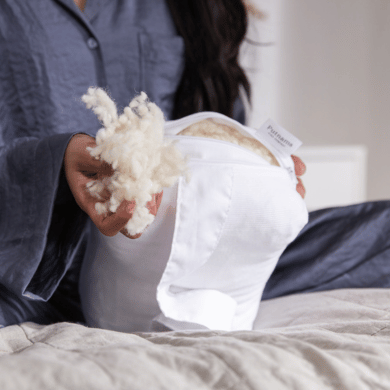
If you prefer a natural filling, our Putnams Organic Buckwheat Hull Pillow offers adjustable, responsive support that conforms to your head and neck position throughout the night. All Putnams pillows are handmade in Devon, UK, from ethically sourced materials.
Safer Alternatives to Mouth Taping
If you're motivated by a desire to breathe better at night, the following evidence-informed alternatives are worth exploring before reaching for tape:
|
Alternative |
How It Helps |
Risk Level |
|---|---|---|
|
Side sleeping |
Reduces airway collapse and snoring |
Very low |
|
Supportive orthopaedic pillow |
Maintains cervical alignment, opens airway |
Very low |
|
Bed wedge pillow |
Elevates head and torso, reduces reflux and snoring |
Very low |
|
Nasal strips |
Physically opens nasal passages from outside |
Low |
|
Saline nasal spray / humidifier |
Reduces dryness and congestion |
Very low |
|
Allergy treatment |
Addresses root cause of nasal blockage |
Low |
|
CPAP therapy |
Gold-standard treatment for diagnosed sleep apnoea |
Clinically managed |
Sleep Hygiene Fundamentals
Dr. Camacho of CU Anschutz is direct: evidence-based sleep hygiene remains the safest and most effective foundation for better sleep. Specifically:
- Maintain a consistent sleep and wake time, every day
- Keep your bedroom cool and dark
- Avoid screens for at least one hour before bed
- Limit alcohol and caffeine in the hours before sleep
- Exercise regularly
"Wouldn't it be great if we could improve our sleep by simply adding mouth tape?" she said. "Unfortunately, mouth tape isn't a good substitute for these hard-to-do things that are definitely healthier and more effective."
See also - Mouth Tape Mania: Why the Internet Swears by Nasal Breathing for Sleep
When to See a Doctor
If you are experiencing persistent snoring, frequent night waking, choking or gasping for air, or daytime exhaustion that doesn't resolve with better sleep habits, these are not symptoms to self-treat with a social media trend. They are clinical symptoms that warrant professional evaluation.
Around 25% of people in westernised countries experience airborne allergic reactions (Clinical and Experimental Allergy, 2016) that can disrupt nasal breathing, and for many, this is a treatable underlying cause. A GP or sleep specialist can help you identify whether your breathing during sleep problems stem from allergies, structural anatomy, sleep-disordered breathing, or something else entirely.
Trying mouth tape instead of seeking medical advice may delay the treatment you actually need.

The Honest Verdict on Mouth Taping
The benefits of nasal breathing are real, well-documented, and worth pursuing. The method of taping your mouth shut to achieve them, however, lacks clinical backing and carries genuine risks for a significant portion of the population.
For most people, the safer path to better sleep breathing starts with proper physical support: the right pillow, the right sleeping position, and a consistent sleep routine. These aren't glamorous solutions, and they won't go viral. But they are grounded in evidence, free from side effects, and genuinely effective.
Explore our full range of sleep support products, handmade in Devon, trusted by over 500,000 customers, and designed to help you sleep better without the risks.
See also - Are You a Mouth Breather? Why It Could Be Affecting Your Sleep (and What to Do)
Frequently Asked Questions
Is mouth taping safe for sleep?
Mouth taping for sleep is not considered safe for everyone. Major medical organisations, including the American Academy of Sleep Medicine, recommend against it. It poses a particular risk for people with obstructive sleep apnoea, nasal congestion, respiratory conditions, or anxiety. Even in healthy individuals, the evidence for benefits is weak and largely anecdotal. Always consult a doctor before attempting it.
Does mouth taping improve sleep quality?
Current evidence does not strongly support mouth taping as a way to improve sleep quality. A 2025 systematic review published in PLOS One (Rotenberg et al.) examined 86 studies and found no strong evidence of health benefits. Some very small, uncontrolled studies suggest modest reductions in snoring for people with mild airflow limitation, but these findings are not consistent and have not been replicated in larger trials.
What are the benefits of nasal breathing during sleep?
Nasal breathing during sleep filters allergens, warms and humidifies air, produces nitric oxide (which supports healthy blood pressure and oxygen exchange), and activates the parasympathetic nervous system to promote deeper, more restorative rest. These benefits are well-supported by research, the controversy lies in whether mouth taping is a safe or effective way to achieve them.
Who should never use mouth tape at night?
People with obstructive sleep apnoea (diagnosed or undiagnosed), nasal congestion, a deviated septum, chronic allergies, asthma, COPD, anxiety disorders, or a risk of vomiting during sleep should never use mouth tape. Children should also never use it. If you are unsure whether you fall into any of these categories, speak to your GP before trying the practice.
What are safer alternatives to mouth taping for better sleep breathing?
Evidence-supported alternatives include sleeping on your side, using an orthopaedic pillow such as the Putnams Putnam Pillow to maintain cervical alignment, elevating the head with a Putnams Bed Wedge, using nasal strips, treating allergies, and practising good sleep hygiene. For diagnosed sleep apnoea, CPAP therapy remains the gold-standard treatment.
Can a pillow affect mouth breathing at night?
Yes. Poor pillow support can misalign the cervical spine, narrow the airway, and encourage mouth breathing at night. A properly fitted pillow that maintains a neutral head and neck position can help keep the airway open, naturally supporting nasal breathing during sleep without any restriction or risk.


From the blog
View all




Leave a comment