


Hip Pain When Sleeping on Your Side: Why Pressure Points Disrupt Rest
Quick Answer: Side sleeping concentrates your body weight onto the greater trochanter, the bony prominence on the outside of your hip, triggering pressure-related pain, inflammation, and pelvic misalignment overnight. Placing a dedicated knee pillow between your legs to keep the pelvis neutral, combined with an appropriate sleep surface, is the most evidence-backed first step for reducing side sleeper hip pain.
Side sleeping is the most common sleep position in the world. A study observing 664 sleepers, published in Nature and Science of Sleep, found that participants spent 54.1% of their time in the lateral position, while a 2023 Panda London survey reported that 79.8% of respondents identify as side sleepers. Doctors broadly recommend the position for its benefits to digestion, breathing, and circulation, particularly during pregnancy.
Yet the same position that protects your airways and reduces acid reflux can quietly destroy your sleep. For millions of adults aged 30 to 65, hip pain at night is not a minor inconvenience. According to Spire Healthcare, chronic hip pain affects around 1 in 5 people aged over 65 and is more common in women, particularly those between 40 and 60. The Arthritis Foundation estimates that more than one-third of US adults report that hip, knee, or foot pain keeps them awake at night.
So what is actually happening to your hip when you sleep on your side? And, more importantly, what can you do about it?
Why the Hip Joint Takes the Strain Overnight
When you lie on your side, your entire body weight concentrates onto a small, bony protrusion at the top of your thigh bone called the greater trochanter. This is the anchor point for several major muscles, including the gluteus medius and gluteus minimus, which are responsible for stabilising your pelvis every time you walk, climb stairs, or balance on one leg.
Sandwiched between this bone and the overlying soft tissue is a small, fluid-filled sac called the bursa. The bursa acts as a shock absorber, allowing the gluteal tendons to glide smoothly without friction. Sustained, overnight compression of the greater trochanter temporarily restricts blood flow to the surrounding soft tissue. Without adequate oxygen and nutrients, tissues cannot repair themselves efficiently overnight, leading to morning stiffness and inflammation.
What is Greater Trochanteric Pain Syndrome (GTPS)?
Historically, lateral hip pain at night was attributed to trochanteric bursitis. Current research tells a more nuanced story. According to a review published in the British Journal of General Practice (Speers & Bhogal, 2017), Greater Trochanteric Pain Syndrome (GTPS), an umbrella term encompassing gluteal tendinopathy, bursitis, and related soft tissue conditions, is the cause of hip pain in 10-20% of patients presenting to primary care, with an incidence of 1.8 patients per 1,000 per year.
Community-based data published in the Journal of Rheumatology puts the prevalence of unilateral GTPS at 15% in women and 6.6% in men.
|
Condition |
Who It Affects Most |
Primary Night Symptom |
|---|---|---|
|
GTPS / Gluteal tendinopathy |
Women aged 40–60 |
Lateral hip ache on the side being slept on |
|
Trochanteric bursitis |
Athletes, manual workers |
Sharp outer hip pain, worse when lying still |
|
Hip osteoarthritis |
Adults 50+ |
Deep groin or thigh ache, morning stiffness |
|
Hip flexor strain |
Desk workers, runners |
Dull ache radiating from groin to hip |
Pain tends to peak at night for a specific reason: when the joint is completely stationary, inflammatory fluids pool in the area. During the day, movement and distraction reduce your awareness of the same discomfort. At night, with nothing else to focus on, the ache becomes unavoidable.
See also - Hip Pain at Night: Why Side Sleepers Struggle to Stay Asleep
The Link Between Pelvic Alignment and Pressure Points
Many side sleepers are surprised to find that their top hip also hurts, the one not in contact with the mattress. This is where pelvic alignment sleep mechanics become critical.
When you sleep on your side without leg support, gravity causes your top leg to drop forward and downward, crossing the body's midline. In clinical terms, this is called hip adduction. That single movement triggers a chain reaction:
- The top hip is overstretched. The gluteal tendons anchored to the top hip's greater trochanter are pulled taut across the bone. Hours of sustained tension compresses the bursa on the non-contact side, producing side sleeper hip pain even where there is no direct mattress pressure.
- The lumbar spine rotates. The downward pull of the dropping leg twists the lower back, placing uncomfortable torque on the sacroiliac (SI) joints.
Your mattress compounds the problem.
A mattress that is too firm prevents the bottom hip from sinking in sufficiently, forcing the lumbar spine to bend upward. One that is too soft lets the hips sink too deeply, creating a hammock-like curve.
Expert consensus is clear: if a sleep surface does not allow the shoulders and hips to sink in slightly while keeping the spine aligned, joint pain is almost inevitable.
See also - Knee Pillow - Your Questions Answered
Repositioning and Support Strategies for Pain-Free Nights
Understanding the mechanics of hip pain sleeping on side opens the door to targeted, practical solutions. Painkillers address the symptom. The strategies below address the cause.
1. Use a Dedicated Knee Pillow for Hip Support
The single most effective intervention for side sleeper hip pain is placing a firm, contoured pillow between your knees and thighs. Physical therapists consistently recommend this approach because it keeps the top leg parallel to the bottom leg, prevents adduction, unloads the gluteal tendons, and restores the pelvis to a neutral position.
A standard feather or polyester pillow typically compresses too much overnight, eventually allowing the top leg to drop and reintroducing strain. A purpose-designed knee pillow for hip support maintains its shape and positioning throughout the night.
Putnams offers several options handmade in Devon, UK, to suit different needs and preferences:
- Knee Pillow – Side Sleeper with Adjustable Strap: Designed specifically for side sleepers, the adjustable strap keeps the pillow in place even if you move during the night, a practical choice for restless sleepers.
- Memory Foam Knee Pillow with Adjustable Strap: Memory foam contours to the shape of your knees and thighs, distributing pressure evenly and maintaining the correct height throughout the night.
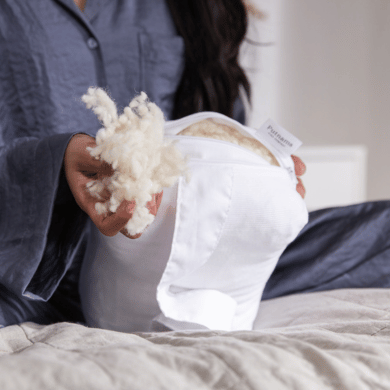
- Natural British Wool Knee Pillow: A breathable, natural alternative for those who prefer non-synthetic materials. British wool regulates temperature well and resists compression over time.
- Organic Buckwheat Hulls Knee Pillow: A vegan and biodegradable option that moulds to your body shape. Buckwheat hulls provide firm, adjustable support that does not flatten.
"The sports recovery pillow I ordered is perfect and makes my night's sleep much better as it relieves back and hip pain. I have two now so I can turn over and have the same comfort." - Mrs Vanessa P
2. Address Your Sleep Surface
If your hip pain at night is concentrated on the bottom hip, your mattress is likely contributing. Side sleepers need a surface with enough softness to cushion the greater trochanter while maintaining a firmer base to keep the spine from sagging.
If replacing your mattress is not currently feasible, a memory foam or natural latex mattress topper of 5-7 cm adds an immediate layer of pressure redistribution. This allows the bony prominence of the hip to sink in slightly, relieving the trochanteric bursa without disrupting spinal alignment. We at Putnams offer a range of mattresses and toppers specifically designed with pressure relief for hip pain in mind.
3. Manage Daytime Posture and Load
Nighttime pain is often linked to what happens during the day. Tendon health depends on cumulative load. Two habits in particular compress the same tendons and bursae that cause trouble overnight:
- Standing with weight shifted onto one hip ("hanging on your hip")
- Sitting with legs crossed; this places the hip in adduction, the same position that aggravates GTPS during sleep
Avoiding these postures during the day reduces the inflammatory load your hip carries into the night. Working with a physiotherapist to build targeted glute-strengthening exercises into your routine can also build the muscular support needed to reduce the load on your hip tendons long-term.
4. Switch Sides or Try Back Sleeping Temporarily
During an acute flare of GTPS or bursitis, clinicians recommend avoiding sleeping on the affected side entirely. Back sleeping distributes body weight across a much larger surface area, removing direct pressure from the greater trochanter. If lying flat on your back causes lower back discomfort, placing a pillow under your knees slightly flexes the hips, reducing tension in the hip flexor muscles.

When to See a Healthcare Professional
Most cases of side sleeper hip pain improve with the strategies above. However, you should speak to your GP or a physiotherapist if:
- Pain persists for more than two to three weeks despite positional adjustments
- Pain regularly wakes you from sleep
- You experience stiffness or reduced range of movement during the day
- Pain is accompanied by swelling, redness, or fever (these are red flag symptoms requiring prompt attention)
- You cannot bear weight on the affected leg
Start With One Change Tonight
Hip pain when sleeping on your side is common, well-understood, and for most people, very manageable without medical intervention. The evidence points to two root causes: concentrated pressure on the greater trochanter and pelvic misalignment from an unsupported top leg. Tackle both, and you address the problem at its source rather than simply masking it.
The simplest place to start is a dedicated knee pillow for hip pain that keeps your pelvis neutral through the night. Browse the Putnams leg and feet pillow range to find the right fit for your sleep style, all handmade in Devon, with over 8,600 verified reviews from customers who made exactly the same decision.
Frequently Asked Questions
Why does my hip hurt when I sleep on my side?
When you lie on your side, your body weight concentrates onto the greater trochanter, the bony protrusion on the outside of the thigh bone. This sustained pressure can irritate the bursa and gluteal tendons, restrict blood flow to soft tissue, and cause lateral hip pain known as Greater Trochanteric Pain Syndrome (GTPS). Your top hip may also ache if the leg is unsupported and drops into adduction, overstretching the tendons on that side.
What is the best pillow for hip pain in side sleepers?
A firm, contoured knee pillow placed between the knees and thighs is the most consistently recommended solution. Choose one that maintains its shape throughout the night, memory foam and buckwheat hull options are both effective. Standard bed pillows often compress too much, eventually allowing the leg to drop and reintroducing strain.
How do I stop hip pain at night without changing my sleep position?
Place a knee pillow between your legs to keep your pelvis neutral, ensure your mattress provides adequate pressure relief at the hip, and reduce daytime habits, such as crossing your legs or standing with weight on one hip, that compress the same tendons overnight.
Who is most likely to experience side sleeper hip pain?
GTPS is significantly more common in women, particularly those aged 40–60. According to research published in the British Journal of General Practice (2017), the unilateral prevalence is 15% in women and 6.6% in men. Athletes, people in manual occupations, and those with conditions such as osteoarthritis, diabetes, or thyroid disease also face elevated risk.
Is hip pain at night a sign of something serious?
Most cases are caused by mechanical pressure and tendon irritation and respond well to positional adjustments. Seek medical advice if pain persists beyond two to three weeks, if you notice swelling, fever, or redness, or if you are unable to bear weight on the affected leg.
Can a mattress cause hip pain at night?
Yes. A mattress that is too firm creates a concentrated pressure point directly on the greater trochanter. One that is too soft causes the hips to sag, placing the lumbar spine into an unnatural curve. A medium-firm surface, or a suitable mattress topper, helps the hip sink in just enough to relieve the bursa while maintaining spinal alignment.


From the blog
View all




Leave a comment